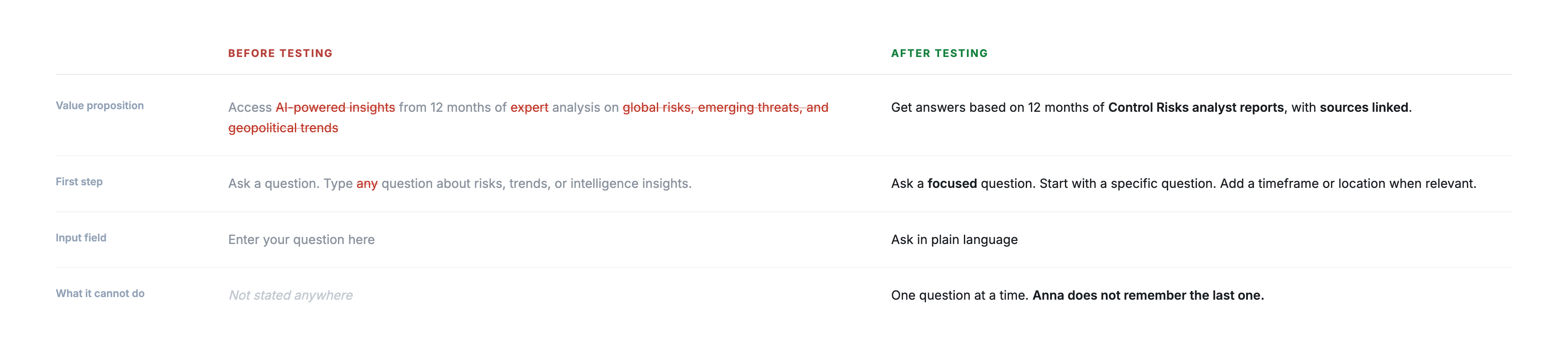
I combined analyst interviews, user feedback, usability testing, and AI-assisted synthesis of user conversations.
Research showed that trust was not shaped by accuracy alone.
Users judged the product through the way answers were structured, whether evidence was visible, and how clearly the system communicated errors or limitations.
That shifted the work from making the experience feel more conversational to making it more accurately reflect the product's real behavior.
Three principles guided the design:
01
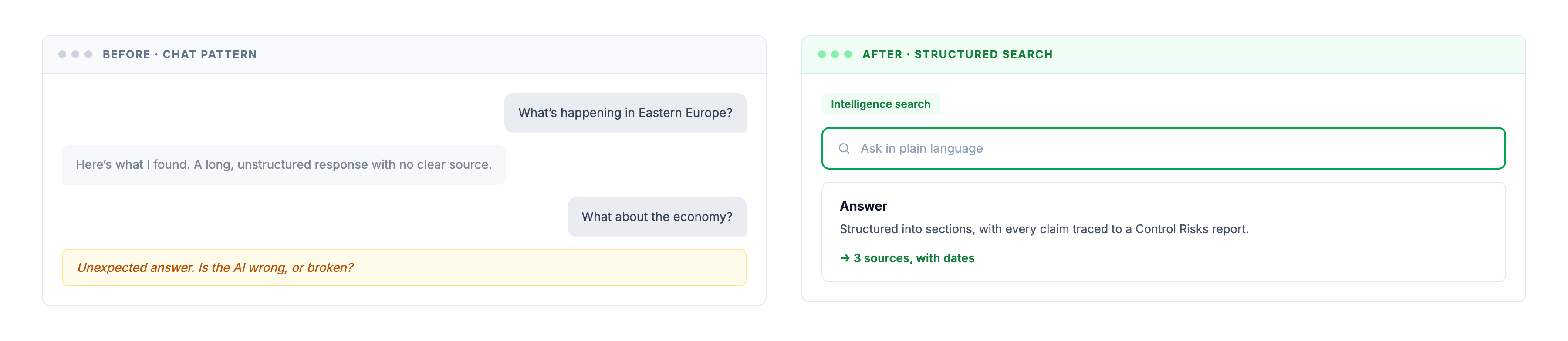
Match the interface to the product
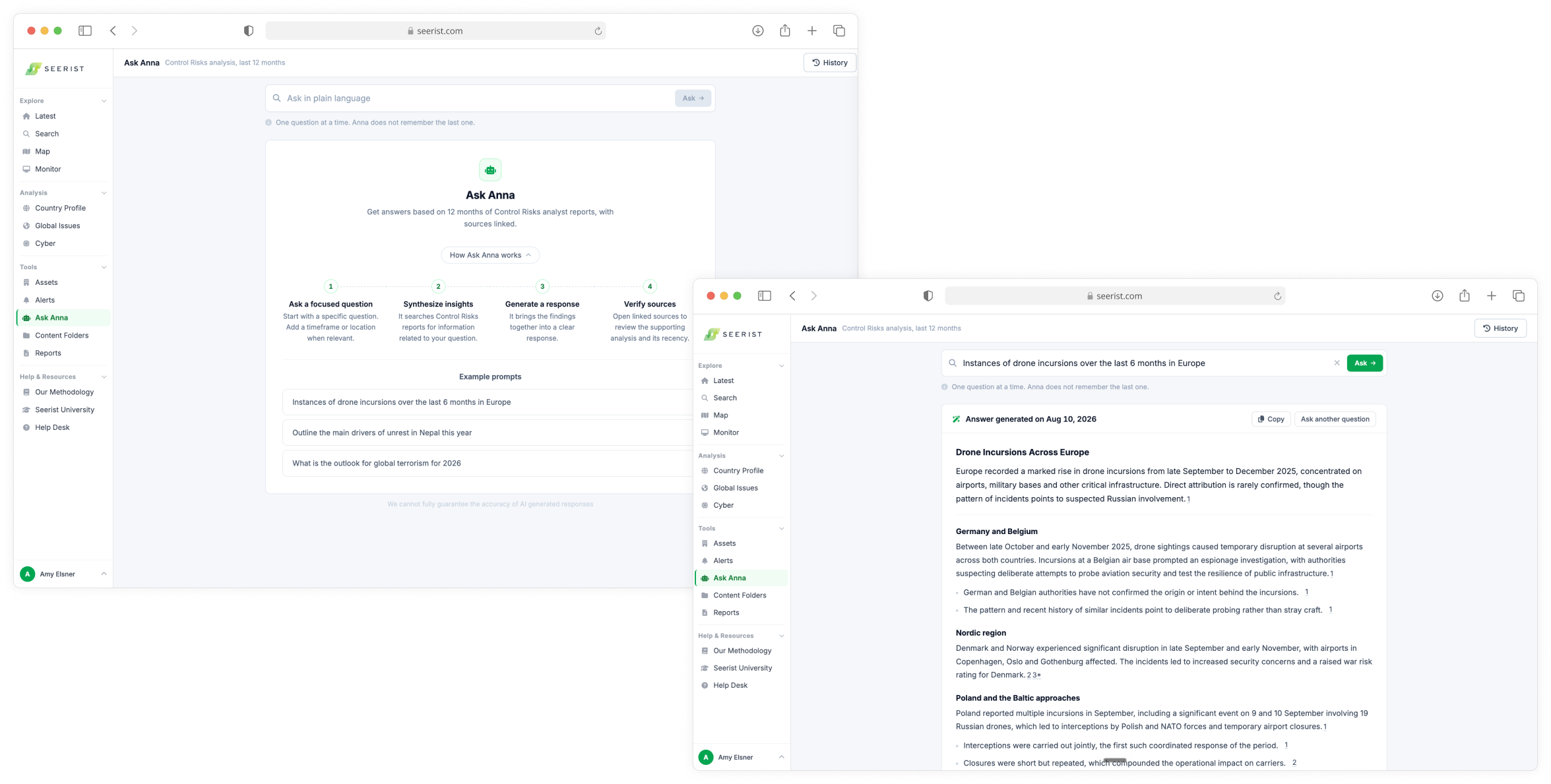
The experience should feel like structured intelligence search, not an open-ended conversation.
02
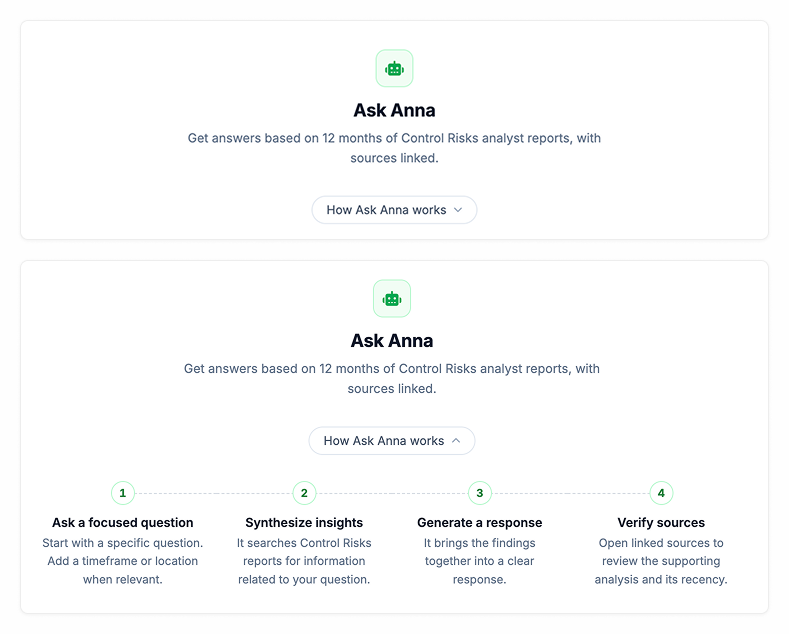
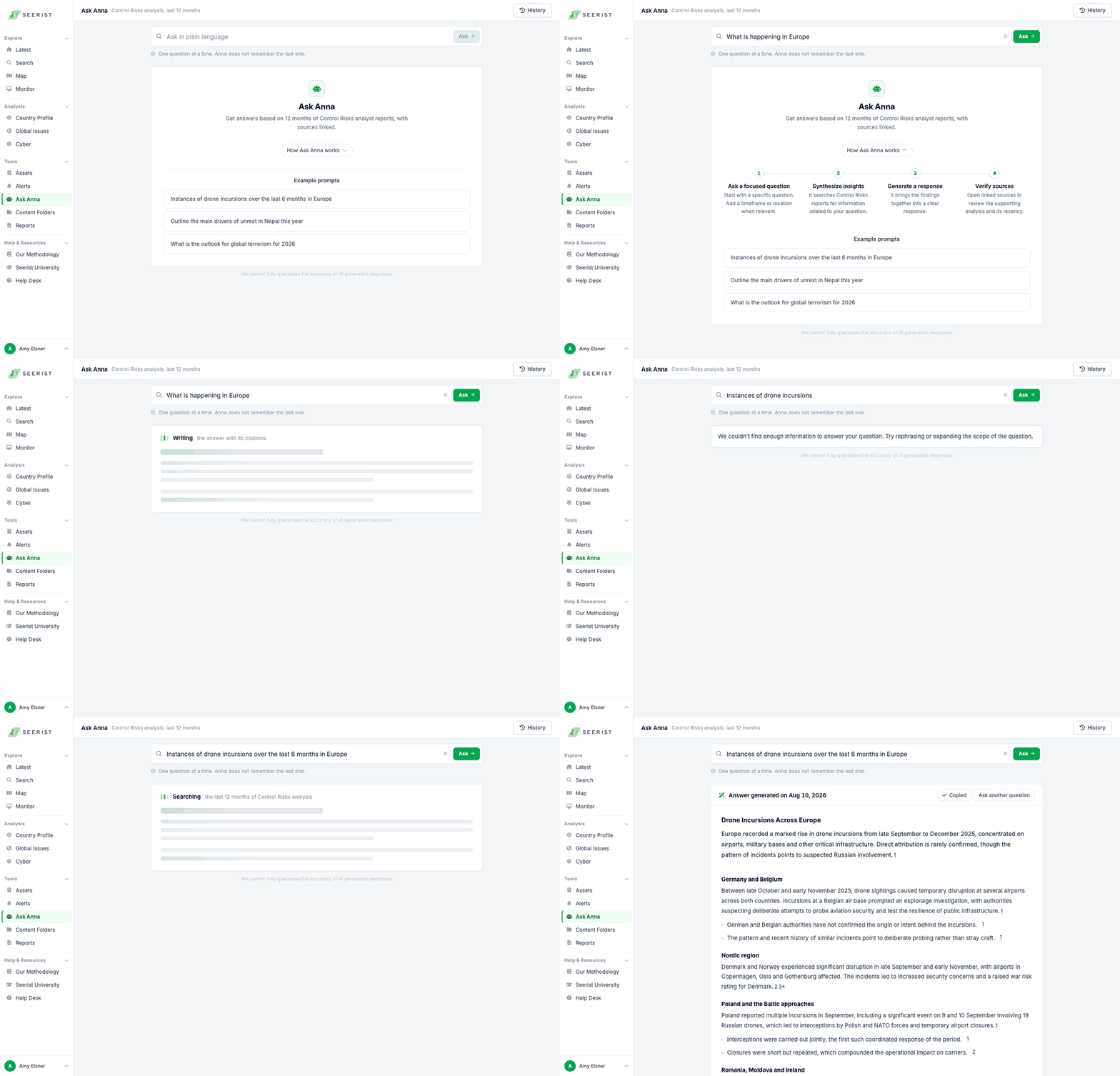
Teach through interaction
Guidance should appear while users work rather than depend on onboarding they may forget.
03
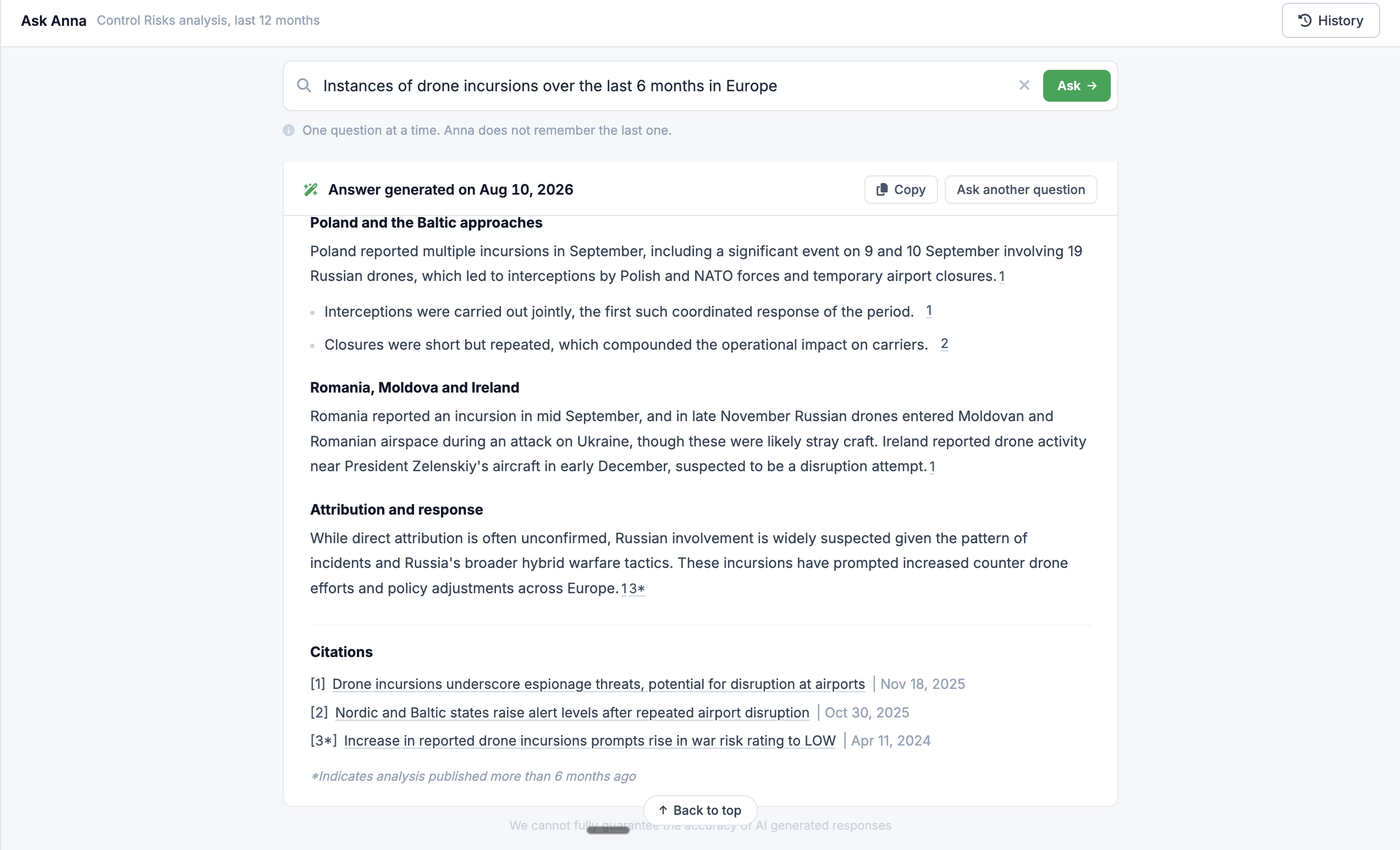
Make confidence visible
Trust should come from clear structure, readable answers, visible evidence, and descriptive error states.
Each principle maps directly to a design decision.
Research
- Users needed guidance before asking
- Trust depended on transparency
- Analysts needed to see when AI was uncertain
→
How Ask Anna actually works
- Helps users ask better questions
- Makes trust visible
- Designed for uncertainty